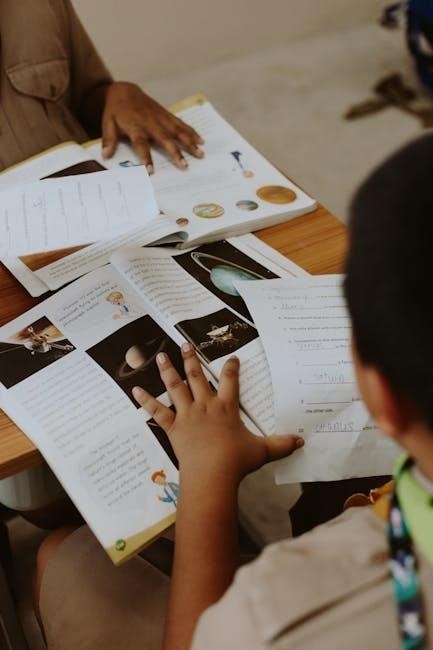
Exploring our cosmos through solar system reading comprehension PDFs offers students engaging science lessons. These resources cover planet formation‚
characteristics‚ and orbital patterns‚ fostering critical thinking skills.
Worksheets and passages‚ like those from Plazoom and Adventures in ISTEM‚ enhance retrieval‚ inference‚ and vocabulary. They align with Common Core standards‚
benefiting 4th and 5th graders.
AI-generated texts‚ coupled with comprehension tasks‚ provide a dynamic learning experience‚ making the solar system accessible and fascinating for all learners.
What is Solar System Reading Comprehension?
Solar system reading comprehension‚ often delivered through PDF worksheets and passages‚ is a multifaceted educational approach. It goes beyond simply memorizing planet names; it’s about understanding the complex processes governing our celestial neighborhood. Resources like those found on Adventures in ISTEM and Plazoom utilize non-fiction texts to build a foundation of knowledge.
These materials present information about the Sun‚ planets (inner and outer)‚ dwarf planets like Pluto‚ asteroid belts‚ and Kuiper belts. Comprehension exercises then assess a student’s ability to recall facts (retrieval practice)‚ draw conclusions based on the text (inference skills)‚ and grasp new vocabulary related to space science.
Worksheets designed for grades 4-5‚ aligning with Common Core standards‚ often include leveled questions to cater to diverse learning needs. The goal is to cultivate a deeper understanding of the solar system’s formation‚ structure‚ and the unique characteristics of each celestial body‚ often utilizing AI-generated content.
Why Use Reading Comprehension for the Solar System?
Employing reading comprehension strategies with solar system PDFs elevates science education beyond rote memorization. It fosters critical thinking‚ analytical skills‚ and a deeper engagement with the subject matter. Resources like those from Plazoom and Adventures in ISTEM provide structured learning experiences.
These materials help students develop the ability to extract key information‚ synthesize complex concepts – such as the nebular hypothesis or planetary accretion – and articulate their understanding. Comprehension exercises‚ including retrieval and inference tasks‚ reinforce learning and build confidence.
Furthermore‚ utilizing PDF worksheets aligned with Common Core standards ensures age-appropriateness and curriculum relevance. Reading comprehension isn’t just about space; it’s about building essential literacy skills within a captivating scientific context‚ even when texts are AI-generated‚ making learning more accessible and effective.

The Formation of the Solar System
Solar system reading comprehension PDFs detail the nebular hypothesis‚ explaining how our system arose from a swirling cloud of gas and dust‚
forming planets through accretion.
Nebular Hypothesis Explained
Solar system reading comprehension PDFs frequently explore the Nebular Hypothesis‚ the prevailing scientific explanation for our solar system’s formation. This model posits that approximately 4.6 billion years ago‚ a vast‚ rotating cloud of gas and dust – a solar nebula – collapsed under its own gravity.
As the nebula contracted‚ it spun faster and flattened into a protoplanetary disk. Most of the mass concentrated in the center‚ eventually igniting nuclear fusion and birthing our Sun. Within the swirling disk‚ dust grains collided and stuck together‚ gradually growing into larger bodies called planetesimals.
These planetesimals continued to accrete material‚ eventually forming protoplanets‚ and ultimately‚ the planets we know today. Comprehension materials often include diagrams illustrating this process‚ alongside questions testing understanding of gravitational collapse‚ disk formation‚ and the role of dust and gas.
Accretion and Planet Formation
Solar system reading comprehension PDFs dedicate significant attention to accretion‚ the process by which planets formed from smaller particles. Following the Nebular Hypothesis‚ planetesimals – rocky and icy bodies – collided within the protoplanetary disk. Electrostatic forces initially drew particles together‚ but gravity became dominant as objects grew larger.
Through countless collisions‚ these planetesimals accreted more material‚ increasing their gravitational pull and sweeping up surrounding debris. This process wasn’t gentle; early planet formation involved frequent‚ violent impacts. Closer to the Sun‚ where temperatures were higher‚ rocky planets formed‚ while further out‚ icy materials allowed gas giants to accumulate massive atmospheres.
Comprehension exercises often focus on differentiating between inner and outer planet formation‚ and understanding how accretion explains the diverse compositions and sizes of planets within our solar system.

Inner Planets: A Closer Look
Solar system reading comprehension PDFs detail Mercury‚ Venus‚ Earth‚ and Mars. Worksheets focus on Earth science‚ aligning with Common Core standards for grades 4-5‚ enhancing understanding.

Mercury: Characteristics and Comprehension Focus
Utilizing solar system reading comprehension PDFs‚ students explore Mercury’s unique characteristics – its proximity to the Sun‚ extreme temperature variations‚ and heavily cratered surface. Comprehension exercises often center around retrieving facts about its orbital period‚ diameter‚ and lack of atmosphere.
Worksheets challenge students to infer why Mercury experiences such drastic temperature swings‚ connecting its closeness to the Sun with the absence of atmospheric regulation. Questions may also assess vocabulary understanding related to planetary science‚ such as “crater‚” “orbit‚” and “atmosphere.”
These PDFs frequently present information in leveled formats‚ catering to diverse reading abilities. Activities might include true/false questions‚ multiple-choice assessments‚ and short-answer prompts designed to solidify understanding of Mercury’s distinct features within our solar system. The focus is on building both factual recall and analytical skills.
Venus: Comprehension Challenges & Key Facts
Solar system reading comprehension PDFs present Venus as a challenging subject due to its dense‚ toxic atmosphere and runaway greenhouse effect. Comprehension focuses on key facts: its retrograde rotation‚ scorching surface temperatures‚ and volcanic landscape. Students often grapple with understanding the concept of atmospheric pressure and its impact on Venus’s environment.
Worksheets frequently pose inference questions‚ asking students to deduce why Venus is hotter than Mercury‚ despite being further from the Sun. Vocabulary building centers around terms like “greenhouse effect‚” “retrograde‚” and “volcanic activity.” PDFs may include diagrams illustrating Venus’s atmospheric layers.
A common challenge is distinguishing between Venus and Earth‚ prompting students to compare and contrast their atmospheric compositions and surface conditions. Comprehension activities often involve analyzing data related to Venus’s atmospheric density and temperature‚ fostering critical thinking skills.
Earth: Unique Features & Reading Comprehension Topics

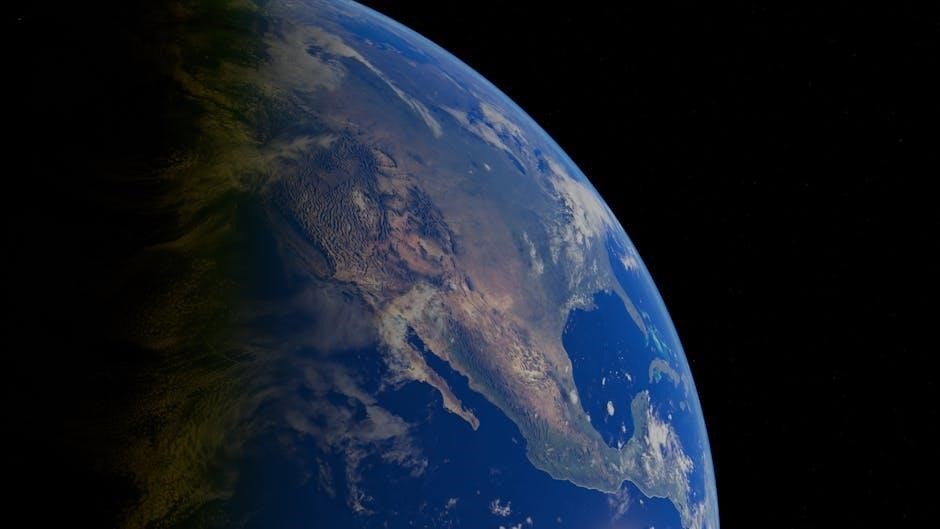
Solar system reading comprehension PDFs highlight Earth’s unique features – liquid water‚ a breathable atmosphere‚ and plate tectonics – supporting life. Comprehension topics center on these aspects‚ exploring the water cycle‚ atmospheric layers‚ and the theory of continental drift. Worksheets often present Earth as a contrast to other planets‚ emphasizing its habitability.
Reading passages frequently focus on Earth’s position within the habitable zone and the factors that contribute to its stable climate. Inference questions challenge students to understand the interconnectedness of Earth’s systems. Vocabulary building includes terms like “biosphere‚” “atmosphere‚” and “lithosphere.”
PDFs may incorporate diagrams illustrating Earth’s internal structure and external processes. Comprehension exercises often involve analyzing data related to Earth’s climate and geological activity‚ promoting scientific literacy and critical analysis.
Mars: The Red Planet & Comprehension Exercises
Solar system reading comprehension PDFs dedicated to Mars explore its reddish appearance‚ caused by iron oxide on its surface. Comprehension exercises focus on Mars’s thin atmosphere‚ polar ice caps‚ and evidence of past water‚ sparking curiosity about potential past life. Passages detail the planet’s canyons‚ volcanoes (like Olympus Mons)‚ and dust storms.
Worksheets often present comparisons between Earth and Mars‚ prompting students to analyze similarities and differences. Retrieval practice questions test recall of key facts‚ while inference tasks require students to interpret evidence suggesting past habitability. Vocabulary includes terms like “terraforming‚” “craters‚” and “atmosphere.”
PDFs may include images from Mars rovers‚ encouraging visual literacy. Comprehension activities often involve analyzing data related to Mars’s climate and geology‚ fostering scientific inquiry and critical thinking skills.
Outer Planets: Giants of the Solar System
Solar system reading comprehension PDFs detail Jupiter and Saturn’s immense size‚ gaseous composition‚ and unique features. Worksheets enhance understanding of these planetary giants.
Jupiter: Size‚ Storms‚ and Comprehension Questions
Jupiter‚ the largest planet in our solar system‚ is a prime focus within solar system reading comprehension PDFs. These resources emphasize its colossal size – over eleven Earths could fit across its diameter! – and its swirling atmospheric storms‚ most notably the Great Red Spot‚ a centuries-old anticyclonic storm.
Comprehension materials often present facts about Jupiter’s composition‚ primarily hydrogen and helium‚ and its powerful magnetic field. Worksheets frequently include questions testing students’ recall of these details‚ as well as their ability to infer information about Jupiter’s environment.
Exercises might ask students to compare and contrast Jupiter with other planets‚ or to explain the significance of its moons‚ like Ganymede and Europa. These PDFs aim to build skills in retrieval‚ inference‚ and vocabulary related to this gas giant‚ making learning engaging and effective.
Saturn: Rings and Reading Comprehension Activities
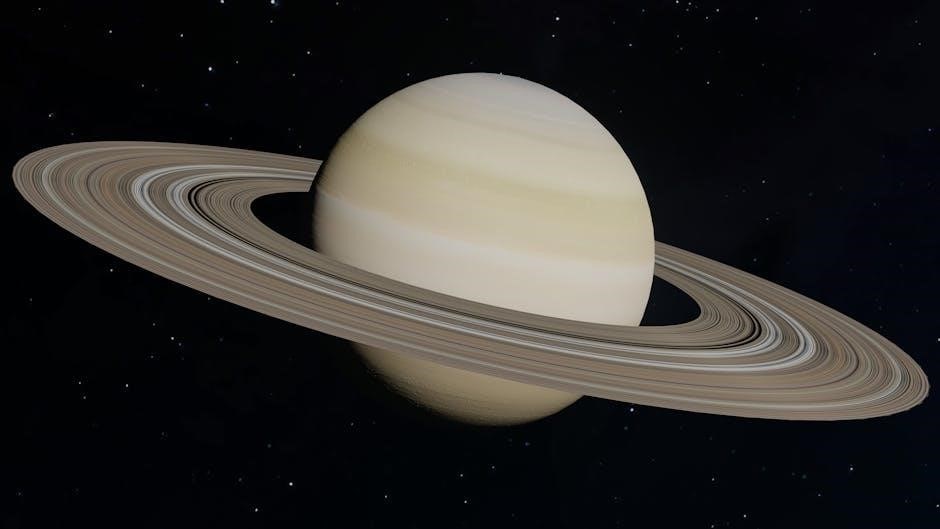
Saturn‚ renowned for its spectacular ring system‚ is a captivating subject within solar system reading comprehension PDFs. These materials detail the composition of the rings – primarily ice particles‚ dust‚ and rocky debris – and explore their origin and structure. Comprehension passages often highlight Saturn’s lower density‚ meaning it could float in water!

Reading comprehension activities frequently focus on the challenges of studying Saturn remotely and the discoveries made by space probes like Cassini. Worksheets may include questions about Saturn’s moons‚ such as Titan‚ and their unique characteristics.
These PDFs encourage students to analyze information‚ make inferences about Saturn’s environment‚ and expand their vocabulary related to planetary science. They aim to foster a deeper understanding of this ringed planet and its place in our solar system‚ enhancing critical thinking skills.
Dwarf Planets and Other Objects
Solar system reading comprehension PDFs explore dwarf planets like Pluto‚ defining their characteristics and orbital paths. They also cover asteroid and Kuiper belts‚
expanding knowledge.
Pluto and the Definition of a Dwarf Planet
Solar system reading comprehension PDFs frequently address Pluto’s reclassification‚ a pivotal moment in planetary science. These resources detail the International Astronomical Union’s (IAU) 2006 definition of a “dwarf planet‚” highlighting the criteria Pluto doesn’t fully meet.
Specifically‚ comprehension passages explain that a dwarf planet orbits the Sun and possesses sufficient mass for its self-gravity to assume a nearly round shape‚ but hasn’t cleared its neighboring region of other objects. This contrasts with a full planet‚ which has cleared its orbit;
Worksheets often include questions prompting students to compare and contrast Pluto with the eight classical planets‚ reinforcing understanding of the IAU definition. They also explore the Kuiper Belt‚ Pluto’s home‚ and the numerous other icy bodies residing there‚ illustrating why Pluto’s orbital path isn’t “clear.”
These PDFs aim to foster critical thinking about scientific classifications and how our understanding of the solar system evolves with new discoveries.
Asteroid Belt & Kuiper Belt: Comprehension Focus
Solar system reading comprehension PDFs dedicate significant attention to the Asteroid Belt and Kuiper Belt‚ regions brimming with celestial objects. Passages explain the Asteroid Belt‚ located between Mars and Jupiter‚ as remnants from the solar system’s formation that never coalesced into a planet.
Worksheets often pose questions about the composition of asteroids – rocky and metallic – and their potential hazards to Earth. Comprehension exercises also cover the Kuiper Belt‚ a distant region beyond Neptune‚ populated by icy bodies‚ including dwarf planets like Pluto.
These PDFs emphasize the differences between the two belts: composition‚ location‚ and the types of objects they contain. They also explore the origins of these belts and their role in understanding the early solar system.
Students learn to infer the conditions necessary for planet formation and why these regions remain populated with smaller bodies.
Reading Comprehension Strategies for the Solar System
Utilizing solar system reading comprehension PDFs boosts learning through retrieval practice and inference skills. Worksheets guide students to recall facts and
draw conclusions about planets.
Retrieval Practice & Solar System Facts
Effective learning hinges on retrieval practice‚ and solar system reading comprehension PDFs are ideal tools. These resources present key facts – planetary order‚ sizes‚ compositions‚ and orbital periods – that students actively recall through targeted questions.
Worksheets often include fill-in-the-blanks‚ multiple-choice‚ and short-answer prompts designed to strengthen memory retention. For example‚ students might be asked to identify the largest planet (Jupiter) or the planet known as the “Red Planet” (Mars).
Resources from sites like Adventures in ISTEM incorporate note-taking templates‚ encouraging students to summarize information in their own words‚ further solidifying understanding. Regularly revisiting these facts through quizzes and exercises enhances long-term retention and builds a strong foundation in astronomy.
This focused practice‚ facilitated by these PDFs‚ transforms passive reading into active knowledge construction.
Inference Skills & Planetary Characteristics
Solar system reading comprehension PDFs powerfully develop inference skills by presenting planetary characteristics and prompting students to draw conclusions. Instead of directly stating relationships‚ passages might describe Venus’s dense atmosphere and proximity to the Sun‚ requiring students to infer why it’s the hottest planet.
Plazoom’s comprehension packs specifically focus on inference‚ challenging pupils to read between the lines and interpret information. Questions might ask students to predict the type of terrain found on Mars based on descriptions of its reddish color and past volcanic activity.
These PDFs move beyond rote memorization‚ encouraging analytical thinking. Students learn to connect evidence from the text with their existing knowledge‚ fostering a deeper understanding of planetary science and the processes shaping our solar system.
This skill-building approach is crucial for scientific literacy.